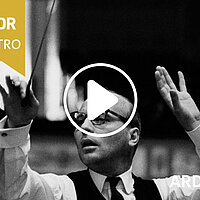
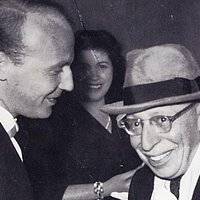
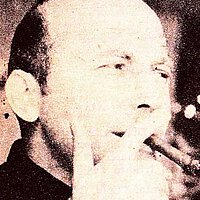
In 1969 and 1970, Hans Werne Henze travelled to Cuba twice. His friend Hans Magnus Enzensberger had arranged an invitation from the Cuban Ministry of Culture. There he soon met Miguel Barnet, then aged 29, who had already published numerous essays and collections of poetry. His novel ‘El Cimarrón’ is regarded as a milestone in Latin American literature and established the genre known as the ‘novela testimonio’ (testimonial novel).
The book is based on months of tape-recorded interviews that Barnet conducted with the runaway slave (= ‘Cimarrón’) Esteban Montejo (1860–1973). Barnet introduced Henze to the book’s protagonist, who was already 107 years old at the time.
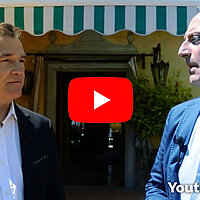
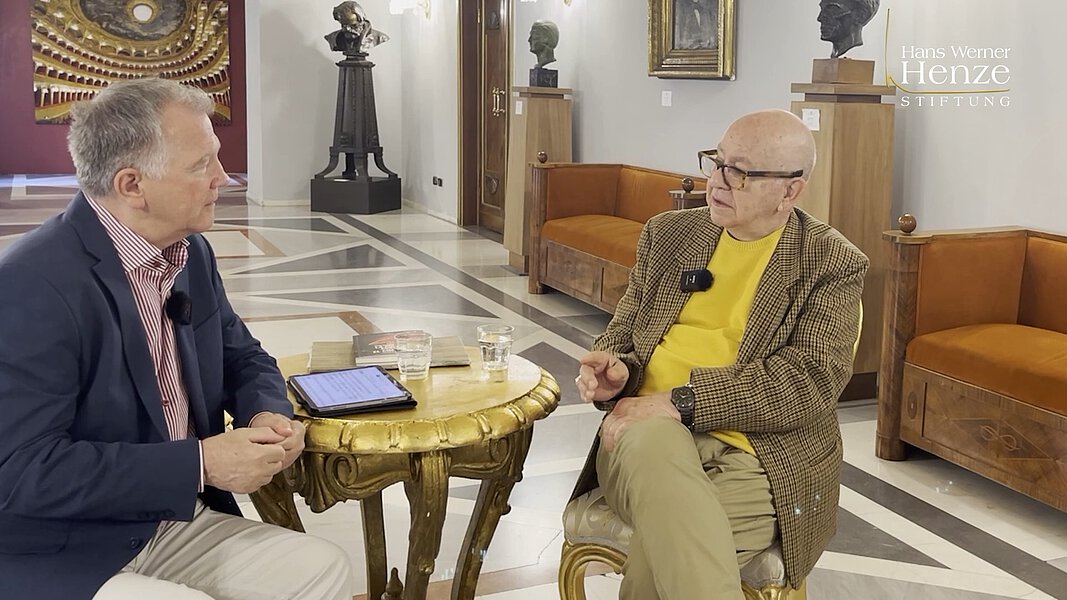
Kerstan and Barnet discuss Henze’s stays in Cuba, the friendship between the two men, and the revolutionary euphoria that inspired the artists of that era. During this time, the composer forged important and lasting friendships, and the island nation seemed to him a place of political and artistic longing. These intense experiences – which included working on a farm and being initiated into the Yoruba cult – had an immense influence on his work and led to masterpieces in which musical aesthetics and political stance are inextricably interwoven.
“El Cimarrón”, the “recital” based on the same-named novel by Miguel Barnet, was created through direct collaboration between Barnet, Henze and Hans Magnus Enzensberger. Barnet also speaks of this fruitful collaboration in the interview with Kerstan, visibly moved and recalling it with the fondest of memories.
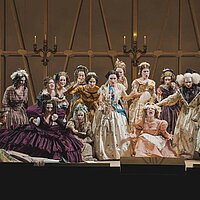
“La Cubana”, originally conceived as a television opera with a large cast and orchestra, did not celebrate its world premiere in its stage version – staged as “La piccola Cubana” by Jobst Liebrecht (not least due to the pandemic) – until 2022 at the Staatsoper unter den Linden in Berlin. As part of the Henze-Cuba Festival in Rome, Michael Kerstan presented a new production which sought to fulfil the composer’s wishes to produce “allegría” – that is, lightness and the art of entertainment.
This television or chamber opera is based on Miguel Barnet’s book ‘Canción de Rachel’. In it, he describes the adventurous life of the diva and variety singer Amalia Sorg, who enjoyed great success in Havana in the 1920s.
A further ‘novela testimonio’, the work provides a vivid snapshot of Cuban society during the Belle Époque under the various dictatorships before the ‘Revolution’. Barnet and Kerstan discuss the protagonist, the era and the cultural-historical context of the turbulent Cuba of the early and mid-20th century.
As the director of both plays, the editor of Henze’s diaries from his months in Cuba, and a long-standing companion of Henze’s, Michael Kerstan is an authentic and knowledgeable interlocutor; the result is a lively conversation with Miguel Barnet, a leading authority in the field of South American ethnology and literature.
Enriched with a wealth of background information, this interview and the accompanying documentary film represent a milestone in the work of the Hans Werner Henze Foundation to preserve and promote the legacy of this composer of the century, and an exclusive offering from the Foundation to mark the centenary of its founder’s birth.
![[Translate to Englisch:]](/fileadmin/_processed_/e/a/csm_Banderole-100_final_c8b02dd48d.png "[Translate to Englisch:]")
![[Translate to Englisch:]](/fileadmin/_processed_/c/1/csm_hwh_stiftung_2026-08_a315f248da.jpg "[Translate to Englisch:]")